


Food and beverage manufacturers must carefully select the right partner for their plant automation projects, especially when incorporating digital transformation of their business processes.
When most people think of manufacturing, it might bring to mind conveyor belts whizzing products between rooms or machines. They might think of something they saw a couple decades ago on the show “How It’s Made” with images of robots assembling parts, machines that fill bottles cans and boxes, and labelers that stamp the brand before products are shipped out. To some extent, that’s automation. When your next project is deeper or more detailed than that, this is where an automation partner comes in. Selecting the right automation partner means finding a systems integrator with the right qualifications, experience, and deep thinking to match your project’s needs – not just checking the task list boxes.
What is the next level of food and beverage plant automation?
Speaking of that deep thinking on food and beverage plant automation – there’s a lot more to it than just production. Automated systems need controls and monitoring to function, which includes the PLCs, HMIs, instrumentation and an OT network to connect it all. With that comes a lot of data, and the SCADA layer provides real-time visibility and controls. Modern systems can hold much more data and – with the right infrastructure – it is relatively easy to add instrumentation and more detail. Now we’ve got not only operational data, but historical for traceability and quality control. We’ve reached a fairly sophisticated point and we haven’t even reached the point of digital transformation.
The industrial controls systems provider, like Vertech, synchronizes the devices, software and infrastructure. If you’ve got tens of thousands of data points, multiple screens of alarms, a manufacturing execution system to integrate, or are looking to take it to the next level, your automation partner orchestrates all that. Integrating your MES, ERP and SPC is more than just plugging some server wires together, and it’s more than just writing an API for the systems to talk at the upper level. A true systems integrator partner understands the tie-ins from the C-Suite to the supply chain, the operator, quality assurance and the warehouse.
Digital recipe management is a good example of what that looks like in practice. Say you're baking bread at home and the recipe calls for one cup of milk and two eggs, but you accidentally pour 1.25 cups of milk. You'd probably toss it and start over. Now make that 500 gallons. Scrapping it isn't an option, so instead you modify the recipe to make a larger batch, scaling every other ingredient up proportionally to match. The question is whether your batching system handles that adjustment on its own or whether it turns into a fully manual scramble of recalculations and handwritten notes. A well-built control system scales the recipe for you, keeps the batch on spec, and records the change so your traceability extends all the way down to the recipe.
Why Compliance-Focused Operators Can't Wing It Anymore
Brand quality standards and an efficient manufacturing process may have brought you this far, but even avoiding recalls doesn’t let you off the hook for food safety compliance requirements. The FSMA traceability requirements may put you on the spot to provide records on demand. Pulling out a binder and saying “I checked that machine last week myself” is not as defensible as one might think, while having a verifiable digital record of a machine’s parameters at any point in time is solid documentation. With it, you’ll have traceability to the batch and unit with audit-ready records, not to mention it’ll be no sweat to retrieve it. You’ll want:
- Instant recall with defensible records
- Consistency among batches for quality, flavor and safety
- Saved labor hours on data entry
- Audit preparedness without the papercuts
SCADA vs. MES vs. Traceability: What's the Difference?

SCADA
Nickname: The Control Freak
Relationship Status: In a committed relationship with the plant floor (24/7/365)
Bio / Looking For: Real-time speed demon who lives in the moment and moves fast. Looking for someone who can handle direct, high-voltage energy without flinching.
Where You'll Find Me: Line-dancing on the floor—the plant floor—or whispering sweet nothings directly to PLCs.
Favorite Things: Instant gratification, sub-second response times, physical buttons, and keeping things running hot.
Turn-Offs: Network latency, ghosting, and being asked to plan ahead.
Red Flags: A dropped packet, a delayed signal, or anyone who says "let's take it slow."

MES
Nickname: The Micromanager
Relationship Status: Stood up by ERP upstairs, taking it out on SCADA downstairs
Bio / Looking For: High-achieving planner seeking a partner who respects structure, schedules, and clear instructions. If you can’t commit to a batch order, swipe left.
Where You'll Find Me: Directing traffic in the lobby—connecting the big spenders upstairs with the crew getting hands-on downstairs.
Favorite Things: Perfect schedules, high OEE, electronic batch records, and giving SCADA a daily list of chores.
Turn-Offs: Unscheduled breaks, missing recipe parameters, and messy hand-written logbooks.
Red Flags: An untracked shift change or a sudden, unapproved change of plans.
Traceability
Nickname: The History Buff
Relationship Status: Keeping a detailed record of everyone we meet (for legal reasons)
Bio / Looking For: Long-term archivist looking for complete transparency and zero secrets. I’ll remember our anniversary, your lot number, and what you were doing at 2:14 AM.
Where You'll Find Me: Organizing our couple's scrapbook, date-stamping every single photo, and keeping all the receipts.
Favorite Things: Full genealogy, clean audit trails, lot numbers, and making FDA inspectors smile.
Turn-Offs: Unlabeled ingredients, missing timestamps, and people saying "don't worry about the past."
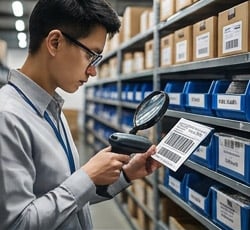
Red Flags: An unreadable barcode, a missing paper trail, or "it's a long story."
These three all have ties to the manufacturing process, but unique roles. SCADA is closest to the equipment and plant floor. MES manages overall production, scheduling, records and OEE. This is where the number crunchers can see how things are going without knowing how the sausage is made, quite literally in some cases. Traceability is somewhat nebulous across SCADA, MES and sometimes its own platform. It knows what happened to each product, good or bad, like an eyewitness but without a clouded memory. To be truly effective, they must be integrated as a system.
|
System |
What It Actually Does |
Where It Lives |
Compliance Role |
|
SCADA |
Monitors and controls equipment in real time — pumps, valves, tanks, temperatures. |
The plant floor, talking directly to PLCs and sensors. |
Captures the raw process data auditors eventually ask about. |
|
MES |
Sits above SCADA to manage production orders, batch records, and OEE. |
Between the plant floor and the business systems (ERP) upstairs. |
Turns raw data into batch genealogy and electronic batch records. |
|
Traceability |
Tracks ingredients, lots, and finished goods from receiving to shipping. |
Layered across SCADA, MES, and often a dedicated traceability platform. |
Delivers the one-up, one-back (and now one-forward) records regulators want. |
How to Evaluate Plant Automation Integrators
If your goal is to connect automation and next level digital plant services with traceability and quality control, there are some questions that will help you make the right choice and not just buy the sales presentation.
-
Do they understand food and beverage compliance, not just controls?
Ask how they've handled FSMA traceability, allergen changeovers, CIP validation, or electronic batch records. They should also have a firm understanding of batching and recipe management. If the answer is vague, that's a data point — and not the kind you want on your audit trail.
-
Can they bridge OT and IT?
Modern plants need control systems that talk to ERP, quality, and cloud reporting tools. A partner who only speaks "plant floor" or only speaks "IT" will leave someone building a bridge out of spreadsheets. They should have a dedicated OT team that is equally comfortable having discussions with your IT administrator and your controls engineer.
-
Do they design for your existing equipment, not just a clean-slate fantasy?
Most plants aren't starting from zero. Good integrators can retrofit and modernize legacy control systems and food and beverage controls without a full rip-and-replace, saving both budget and your production schedule. A best-in-class integrator brings experience to make recommendations for when to add an instrument, how to use the available data, and how modern plants are making the most out of their systems.
-
What does support look like after go-live?
Automation isn't a "set it and forget it" crockpot. Ask about response times, remote monitoring, and whether you'll ever see that engineer again after the ribbon-cutting.Top-tier integrators have options for advanced support and maintenance needs for those who need to supplement or outsource with a trusted provider.
-
Can they show validated, documented outcomes?
Ask for examples of measurable results — uptime improvements, reduced deviations, faster batch release — not just a list of PLC brands they're comfortable with. You’ll also gain peace of mind from knowing if they have 3rd party auditing and certifications like being CSIA certified or having UL Standard certification.
Digital Plant Service Providers vs. Traditional Integrators: Is There a Difference?
Traditional systems integrators typically focus on designing and installing control systems: panels, PLC programming, HMI screens. Digital Plant service providers expand that scope to include the software and data layer — MES, historian, traceability, analytics, and cybersecurity — plus ongoing support over the life of the plant. If your project touches compliance reporting or plant-wide data, you likely need the broader digital transformation skill set, not just panel-building. If you are even thinking about food safety and traceability, having a digitized manufacturing service provider is your best bet. Get details on the team that supports this to be sure this doesn’t just rely on one or two engineers with credentials. There should be a dedicated department for digital transformation and digitized production.
Red Flags to Watch for When Hiring Industrial Automation Services
- They can't explain how their system supports food and beverage compliance without pointing at a brochure.
- Every proposal recommends a full rebuild, regardless of what you actually asked for. (When your only tool is a hammer, every plant looks like a nail.)
- No mention of cybersecurity for connected control systems. In 2026, that's not optional seasoning — it's a base ingredient.
- Vague answers on data ownership. You should own your process data, not rent it back from a vendor.
- No demonstrated cases from other food and beverage clients — construction and automotive experience is great, but this industry has its own quirks (and its own regulators).
A Quick Compliance Checklist Before You Sign
- Traceability that captures one-up, one-back (and ideally one-forward) records automatically.
- Electronic batch records with time-stamped, tamper-evident audit trails.
- Validated CIP/COP cycles with documented parameters, not just "it looked clean."
- Role-based access and change control on control systems — because not everyone should be able to edit a setpoint on a whim.
- A clear data backup and disaster-recovery plan, so a server failure doesn't become a compliance failure.
- Integration between SCADA, MES, SPC and traceability systems, so data enters once and flows everywhere it's needed.
Frequently Asked Questions
What is the difference between SCADA and MES in food and beverage manufacturing?
SCADA provides real-time monitoring and control of plant equipment, while MES manages production orders, batch execution, and performance data one layer above SCADA. SCADA tells you what a valve is doing right now; MES tells you what that valve's activity means for the batch, the shift, and the compliance record.
Do I need a full MES if I already have SCADA?
Not necessarily on day one, but most compliance-focused operators eventually need MES-level functionality to manage batch records, genealogy, and performance reporting at scale. Many manufacturers start with strong SCADA and traceability, then layer in MES as reporting and audit demands grow.
How long does a typical food and beverage plant automation project take?
Timelines vary widely based on scope, but a focused SCADA or traceability upgrade often runs a few months, while a plant-wide MES and controls overhaul can take a year or more when phased around production schedules. A good integrator will phase the work so the plant keeps running, not grind to a halt for a software update.
What compliance standards should food and beverage controls address?
At minimum, systems should support FSMA traceability recordkeeping, HACCP and preventive controls documentation, and any customer-specific or GFSI-aligned audit requirements (such as SQF or BRCGS). Requirements vary by product and market, so it's worth confirming specifics with your quality team and integrator together.
How do I choose between plant automation integrators?
Prioritize integrators with direct food and beverage compliance experience, the ability to bridge OT and IT systems, a track record retrofitting existing equipment, and a documented post-go-live support plan. Experience with food and beverage operations matters more than a long list of unrelated projects.
Unique Food & Beverage Considerations
When what you are manufacturing is regulated by the government, has about a million ways it can spoil, has zero tolerance for contamination or unlabeled allergens, and must be traceable, you have an inherently complex system. A systems integrator that has experience with food and beverage manufacturing is already up to speed and knows the kind of monitoring, controls and oversight you’ll need.
Guess what: we cover all those bases! Let's talk about your next project.




Comments