

This is Part 2 of our series on Upskilling in Engineering.
In the previous article, we introduced the idea that upskilling is fundamentally a form of teaching. Engineers routinely help others develop new skills, whether that means teaching someone how to program a PLC, run a project, or interact with a customer. The challenge is not whether teaching occurs, but how to do it most effectively.
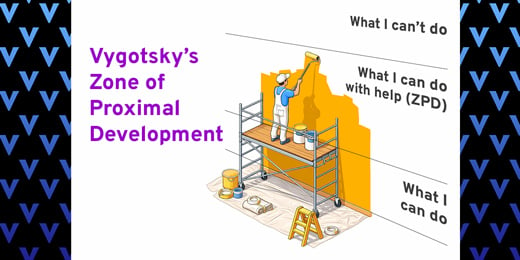
One concept from educational research that helps explain how people learn most effectively is the Zone of Proximal Development.
Educational psychologist Lev Vygotsky defined the Zone of Proximal Development (ZPD), as the range of tasks a person cannot complete independently but can accomplish with support from someone more experienced.
Another way to think about it is the stretch zone. It is the space where someone can succeed most of the time, but the task still contains enough unfamiliar material to promote growth.
If a task is too easy, there is no learning. The person already knows how to do it. If a task is too difficult, the person cannot succeed even with guidance. Progress stalls and frustration increases.
Real growth happens between those two extremes.
An Example of ZPD
A common example in education is teaching children to read. If a student can read every word in a book without effort, the book is too easy and little learning occurs. On the other hand, if the book contains too many unfamiliar words, the student becomes overwhelmed and cannot follow the story.
The ideal learning situation lies in the middle. The student recognizes most of the words but encounters new ones often enough that the teacher can provide guidance. With that support, the student improves their reading ability.
The same principle applies to professional skill development.
The Zone in Engineering
Consider a new engineering graduate joining an industrial automation team. If they are assigned only simple documentation tasks or small configuration changes, they may become comfortable but will not develop deeper technical skills.
If they are immediately given responsibility for designing and commissioning an entire system, they are likely to struggle. The problem is too large and unfamiliar.
The Zone of Proximal Development lies between those extremes.
A more effective progression might look something like this:
- First learning basic PLC tasks such as navigating the software, uploading and downloading code, and programming simple routines
- Then implementing small sections of logic within a larger program
- Later taking responsibility for portions of a project under the guidance of a more experienced engineer
- Eventually implementing entire PLC programs or running projects independently
Each step expands the engineer’s capability, but the challenges remain manageable because guidance is available when needed.
Growth with Manageable Risk
Professional environments introduce an additional factor that classrooms often do not face: risk.
Engineering teams cannot afford uncontrolled failure. A mistake may affect schedules, budgets, or customer relationships. At the same time, employees must take on larger and more complex tasks if they are going to grow.
Operating within the Zone of Proximal Development allows teams to balance these competing pressures.
By assigning work that is slightly beyond someone’s independent ability, while still providing access to more experienced colleagues, organizations create opportunities for growth while keeping problems recoverable. Mistakes may still occur, but they happen in situations where guidance and correction are available.
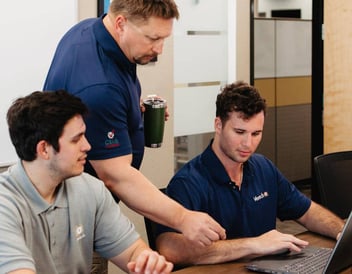
In practice, this often takes the form of collaboration. A newer engineer works through a challenging problem while a more experienced engineer reviews the approach, answers questions, and provides direction when necessary.
Recognizing When Someone Is in the Zone
Identifying the right level of challenge requires observation and communication.
Someone working within their Zone of Proximal Development may demonstrate a few characteristics. They can make progress independently for periods of time. They encounter obstacles but can move forward after receiving guidance. Most importantly, their understanding expands as they work through the task.
When someone consistently completes work without difficulty, they may no longer be in their growth zone. The work has become routine.
When someone repeatedly becomes stuck or overwhelmed, the challenge may be too large. In those cases, the task may need to be broken into smaller pieces or supported more closely.
The goal is not perfection. The goal is steady development.
Setting the Stage for Effective Teaching
Understanding the Zone of Proximal Development explains where learning happens, but it does not yet explain how mentors provide the support that makes success possible.
That support takes several forms. Experienced engineers guide others, share context, ask questions, and help structure problems in ways that make them solvable. Educational research refers to these types of support as scaffolding.
What’s Next in the Series
In the next article, we will explore how scaffolding works, how mentors and learners develop shared understanding when working together, and how effective guidance adapts as someone gains experience. These mechanics are what allow engineers to operate within the Zone of Proximal Development and continue building new skills over time.


Comments