

This is Part 1 of our series on Upskilling in Engineering.
We are all teachers. In professional jargon, we call it upskilling.
The idea for this series started during a conversation my wife and I had over dinner. I was describing some of the challenges we face when developing newer engineers. How much guidance is helpful, and when does it become micromanagement? How do you promote growth without overwhelming someone? How do you give people real responsibility while still protecting projects from unnecessary risk?
My wife, who has a master’s degree in education, responded with a simple observation: people study these questions for a living.
Teachers study how people learn, develop skills, and mentor others toward independence. While most of this research is applied in classrooms, many of the principles translate to professional environments, including engineering and industrial automation.
Real-world Learning through Experience
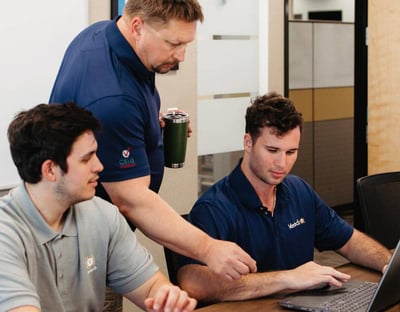 In many technical fields, formal education only takes you so far. Most real-world, applicable learning happens on the job. New engineers are rarely experts in PLC programming, architecture design, commissioning, or customer interaction when they graduate. Instead, they develop these skills through experience and guidance of more experienced colleagues.
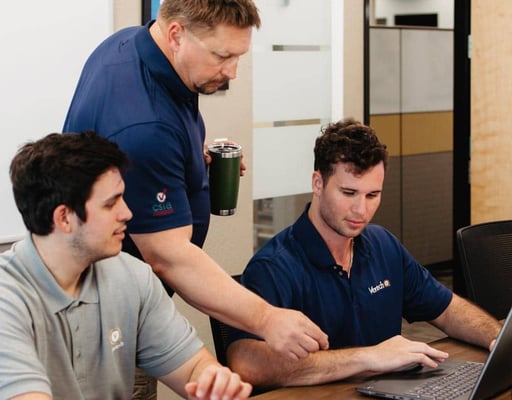
That means the daily work of engineering teams naturally involves teaching. Senior engineers teach junior engineers. Project leads teach team members how to run projects. Peers teach each other while collaborating to solve problems. Despite how central this process is, we often treat it as informal. Learning happens through trial and error, quick conversations, or simply figuring things out along the way.
Pitfalls of Learning without Structure
There is value in that kind of experiential learning, but it has limits. Without some intentional structure, upskilling becomes inconsistent. Sometimes people are given too much responsibility too quickly, leading to frustration or project risk. Other times they are given too little responsibility and their growth stalls.
Educational research offers useful ways to think about these challenges. Concepts such as scaffolding, gradual release of responsibility, and the Zone of Proximal Development describe how effective teaching balances guidance, challenge, and independence.
Upskilling in Engineering
In this series we will explore how these ideas apply to engineering teams. Along the way we will discuss where real learning happens, how mentors provide effective support, how different teaching structures work, and what happens when support systems break down.
The goal is not to turn engineers into professional educators. Instead, it is to borrow useful ideas from people who study education for a living and apply them to how we develop technical talent.
Because whether we think about it this way or not, most of us are already teaching every day.
The question is whether we are doing it intentionally and effectively.
What’s Next in the Series
This article introduces the idea that upskilling is fundamentally a form of teaching. In the next article, we will examine where real learning actually happens.
Educational psychologist Lev Vygotsky described a concept called the Zone of Proximal Development, which explains why growth occurs when people are challenged just beyond what they can do on their own, but not so far that they fail completely.
In engineering terms, it is the difference between giving someone a small PLC task, a portion of a project, or an entire system to own.
Understanding how to operate within that space is the starting point for effective mentoring and intentional upskilling.


Comments