

This is Part 3 of our series on Upskilling in Engineering.
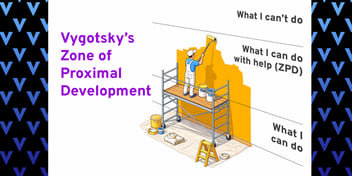
In the previous article, we introduced the Zone of Proximal Development and described where real growth happens. People learn most effectively when they are working on tasks that are just beyond what they can do independently, but still achievable with support.
That raises the next question: what does that support actually look like?
The Mechanics of Good Teaching: Scaffolding, Intersubjectivity, and Contingency
Educational research provides a useful framework for understanding how experienced individuals help others succeed in that stretch zone. Three key concepts describe this process: scaffolding, intersubjectivity, and contingency.
Together, these form the mechanics of effective teaching.
Scaffolding: Providing the Right Support
Scaffolding is the support provided to help someone complete a task they could not do on their own. Just like physical scaffolding supports a structure during construction, learning scaffolding supports a person while they develop a new skill. It is temporary and is removed once it is no longer needed. In a classroom, this might look like a teacher guiding a student through reading a difficult passage.
In engineering, scaffolding can take many forms:
- Walking through a problem step by step
- Providing partial solutions or examples
- Reviewing work and giving targeted feedback
- Breaking a large task into smaller, manageable pieces
- Being available to answer questions at key points
A new engineer learning PLC programming does not need to solve everything independently on day one. With the right support, they can complete meaningful work while still learning the underlying concepts. Without that support, the same task may be out of reach.
Intersubjectivity: Shared Understanding
 Scaffolding is only effective if it is aligned with the learner’s current level of understanding. That alignment comes from intersubjectivity.
Intersubjectivity is the shared understanding between two people working toward the same goal.
In a teaching context, it means the mentor understands what the learner knows, what they do not know, and where they are likely to struggle. At the same time, the learner understands the objective and how the mentor is trying to help.
In engineering teams, this often develops through working together:
- Asking questions and clarifying assumptions
- Explaining reasoning, not just solutions
- Observing how someone approaches a problem
- Adjusting explanations based on feedback
Without this shared understanding, support can miss the mark. Explanations may be too advanced, too basic, or disconnected from the actual problem being solved. With it, guidance becomes more precise and effective.
Contingency: Adjusting in Real Time
Even with a shared understanding, effective teaching requires continuous adjustment. This is where contingency comes into play.
Contingency refers to responding to the learner’s needs in real time. It is the ability to provide the right amount of help at the right moment. Sometimes that means stepping in quickly to prevent someone from getting stuck. Other times it means stepping back and allowing them to work through a problem independently.
In practice, this might look like:
- Letting someone attempt a solution before offering input
- Providing hints instead of full answers
- Increasing guidance when progress stalls
- Reducing involvement as confidence grows
There is no fixed formula. The appropriate level of support changes as the learner develops. This is why effective teaching often feels dynamic. It is not a checklist, but an ongoing process of observation and adjustment.
Putting It Together
These three elements work together to enable learning within the Zone of Proximal Development.
Scaffolding provides the support structure. Intersubjectivity ensures that support is aligned with the learner’s needs. Contingency allows that support to adapt as the situation changes.
When all three are present, people are able to take on challenges they could not handle alone and gradually build the capability to do so independently. If one or more are missing, problems begin to appear. Support may be too rigid, poorly targeted, or absent entirely.
Setting Up the Next Step
Understanding how to support learning is only part of the picture. The next question is how to structure that support within a team or project. Should a mentor lead from the front and guide each step? Or should the learner take more ownership and seek help when needed?
What’s Next in the Series
In the next article, we will look at two broad approaches to this question: teacher centered and student centered learning, and how each can be applied in engineering environments depending on the situation.


Comments