

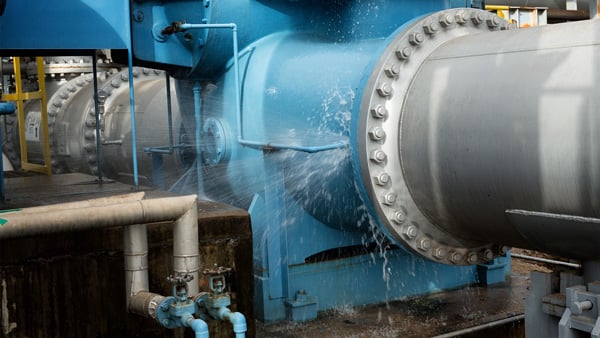
The Hidden Cost of "Running Fine"
"The plant is running fine."
It's one of the most common phrases you'll hear walking through a water or wastewater facility, and one of the most expensive assumptions in the industry.
If water is being treated, pumps are spinning, and no red lights are flashing, it's natural to think everything is operating the way it should. But there's a difference between a plant that's working and a plant that's working efficiently. Most facilities never stop to check which one they actually have.
Here's the uncomfortable part. A pump operating 10% longer than necessary. Chemical feed rates that haven't been reviewed in years. Nuisance alarms that quietly eat up operator attention every shift. None of these trigger a failure. None of them show up on a maintenance ticket. They just accumulate, month after month, in the utility bill, the chemical order, and the wear on equipment nobody's watching closely enough.
Reliability Got You Here. It Won't Get You Further.
For decades, the entire purpose of automation in this industry was reliability. Can we treat the water safely? Can we hit our permit limits? Can we keep the plant online without a call at 2 a.m.?
Those questions still matter, a lot. But they're no longer the only questions worth asking. Electricity costs keep climbing. Chemical prices are unpredictable. Infrastructure is aging faster than budgets are growing. Operators are harder to hire and even harder to keep. And more utilities are being asked to do more with a workforce and a budget that hasn't grown to match.
Meeting your permit is the floor now, not the finish line. The utilities pulling ahead are the ones treating operational efficiency as seriously as they've always treated operational reliability.
Five Costs Hiding in Plain Sight
-
Energy Demand That Creeps Up Without Anyone Noticing
A blower running an hour longer than it needs to each day. A pump slightly oversized for the job it's doing. Equipment cycling on during peak demand pricing instead of off-peak hours. None of it trips an alarm. None of it changes what the operator sees on a daily walkthrough.
But run those small inefficiencies for a year, and the numbers add up in a way that's hard to ignore once someone actually looks. Smart scheduling, driven by real process demand instead of a fixed timer, routinely finds savings that were sitting there the whole time.
-
Chemical Dosing Nobody's Touched in Years
Dosing rates are set conservatively for good reason. Nobody wants to risk a compliance issue by underdosing. But conservative settings have a habit of becoming permanent settings. Operators inherit dosing values set years earlier, and unless someone actively revisits them, they never change, even as water characteristics, seasons, and upstream processes shift underneath them.
The plant stays compliant. It also stays wasteful. A small correction in dosing control, based on real-time water quality instead of a number from five years ago, can meaningfully cut chemical spend without touching treatment performance.
-
Equipment Aging Faster Than It Should
Consider two identical lift stations. Both meet permit requirements. Both run without a single major failure this year. One, however, cycles its pumps hundreds of extra times each month because of poorly configured level setpoints. Nothing about it trips an alarm. But the extra cycling accelerates equipment wear, drives up energy use, and shortens the interval between maintenance visits.
On paper, both stations are "running fine." In reality, one is quietly becoming far more expensive to operate, and nobody will notice until a motor fails years ahead of schedule and someone finally asks why.
Automation that actively balances runtime across assets, instead of always defaulting to whatever equipment kicked on last time, catches this kind of drift before it becomes a capital expense.
-
Too Many Alarms, Not Enough Signal
Ask any operator what wears them down, and it's rarely too few alarms. It's too many. When the same nuisance alarm fires for the hundredth time, operators start tuning it out, and that habit doesn't stay contained to the alarm that trained it. Eventually the alarm that actually matters gets lost in the noise of the ones that never did.
Good alarm management isn't about adding more alerts. It's about cutting the noise so the alarms that remain actually mean something, which translates into faster response when it counts and far fewer surprises.
-
Decisions Made on Gut Feel, Not Data
Most plants generate mountains of operational data. Very few actually use it. Runtime logs, energy usage, chemical consumption, and process trends often live in three different systems that nobody cross-references, if they get reviewed at all.
That leaves operators making calls based on memory and instinct. Experience is genuinely valuable, nobody's arguing otherwise. But experience paired with real data beats experience alone, every time.
"Running" and "Optimized" Aren't the Same Word
Think about a car that starts every morning and gets you where you're going, every single day, without fail. Does that mean it's running at peak efficiency? Not necessarily. You'd still check the fuel economy. The tire pressure. The maintenance schedule.
Your plant deserves the same scrutiny. It can hit every treatment target and still be quietly burning through energy, chemicals, and equipment life it doesn't have to. Optimization isn't about fixing what's broken. It's about improving everything that happens before something breaks.
What Modern Automation Actually Buys You
Done right, today's automation systems go far beyond basic control. They give you real answers to questions most plants are currently guessing at:
- Which pumps are quietly costing the most to run?
- Which assets are racking up abnormal runtime hours, like that lift station with the bad setpoints?
- Is your chemical feed matched to today's water, or to five-year-old assumptions?
- Which alarms are actually worth an operator's attention?
- Where is time being lost that nobody's tracking?
Facilities that get this right stop asking "did anything fail today?" and start asking "how do we run tighter tomorrow?" That's a different operating philosophy, and it changes the long-term cost curve of the entire facility.
Small Fixes, Compounding Payoff
Nobody transforms a plant's economics with one big project. It happens through dozens of smaller ones: a smarter pump schedule here, better sequencing logic there, tighter alarm management, dosing tuned to reality instead of habit, runtime balanced across the fleet.
Any single one of these looks minor on its own. Stacked together, they lower operating costs, extend equipment life, and make the plant genuinely more resilient, not just busier.
Where This Is Heading
The future of water and wastewater operations will not be defined solely by reliability. It will be defined by how effectively utilities turn operational data into measurable improvement. Plants that continuously optimize energy use, chemical dosing, equipment health, and operator efficiency will be the best positioned to control costs while meeting rising demands on aging infrastructure and leaner teams.
That shift is already underway. The utilities that start now will spend the next decade compounding small advantages. The ones that wait will spend it catching up.
At Vertech, we help water and wastewater utilities find out exactly where "fine" is quietly costing more than it should, and what it takes to close that gap without touching the reliability already built into the plant.
Ready to see what your plant might be leaving on the table?
Chat with one of our water/wastewater experts. Get a clear, specific picture of where energy, chemicals, and maintenance dollars are slipping through the cracks - before your next budget cycle, not after it.


Comments